


Add a live URL poster advert
A URL Poster is a web page used as a poster advert, either inserted between film posters or played directly in Advertise Only mode. Use it for a live weather board, news update or cinema notice page. Instead of uploading a picture, you save a name and a web address.
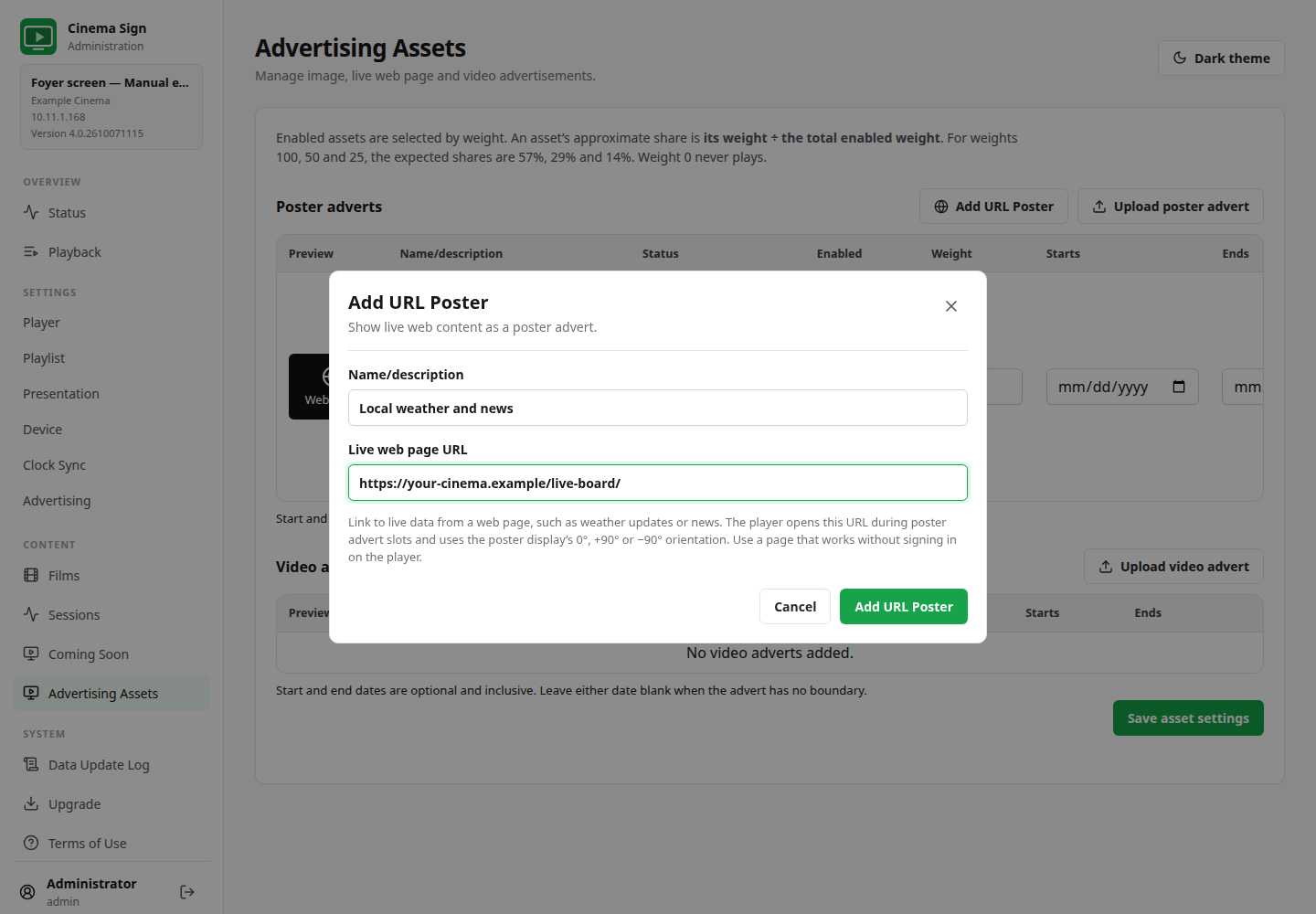
Advertising Assets → Poster adverts → Add URL Poster
- Select Add URL Poster.
- Enter a clear Name/description, such as “Foyer weather updates”.
- Enter the complete Live web page URL, starting with
http://orhttps://. - Use a page that works without signing in on the player and can be read without scrolling.
- Set Preload time (seconds): default 30, maximum 120, or 0 for no background loading.
- Select Add URL Poster in the dialog.
- Review enabled state, weight and dates, then save asset settings.
- For cinema insertion, enable Poster Advertising and Clock-synchronized playback using the advertising steps. For Advertise Only, choose Poster on Presentation; either playback order works.
- Check the page on the actual display in its mounted orientation.
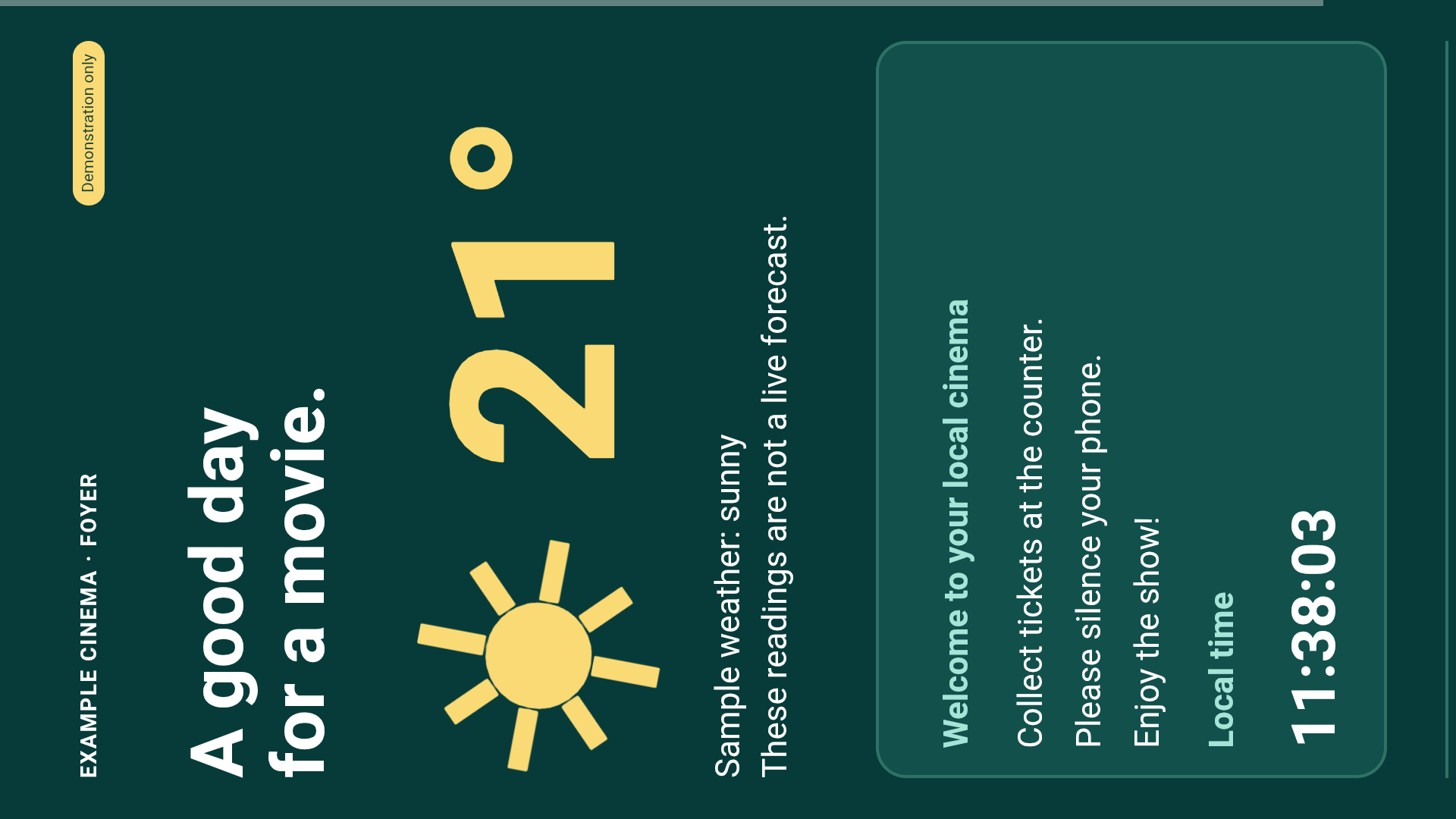
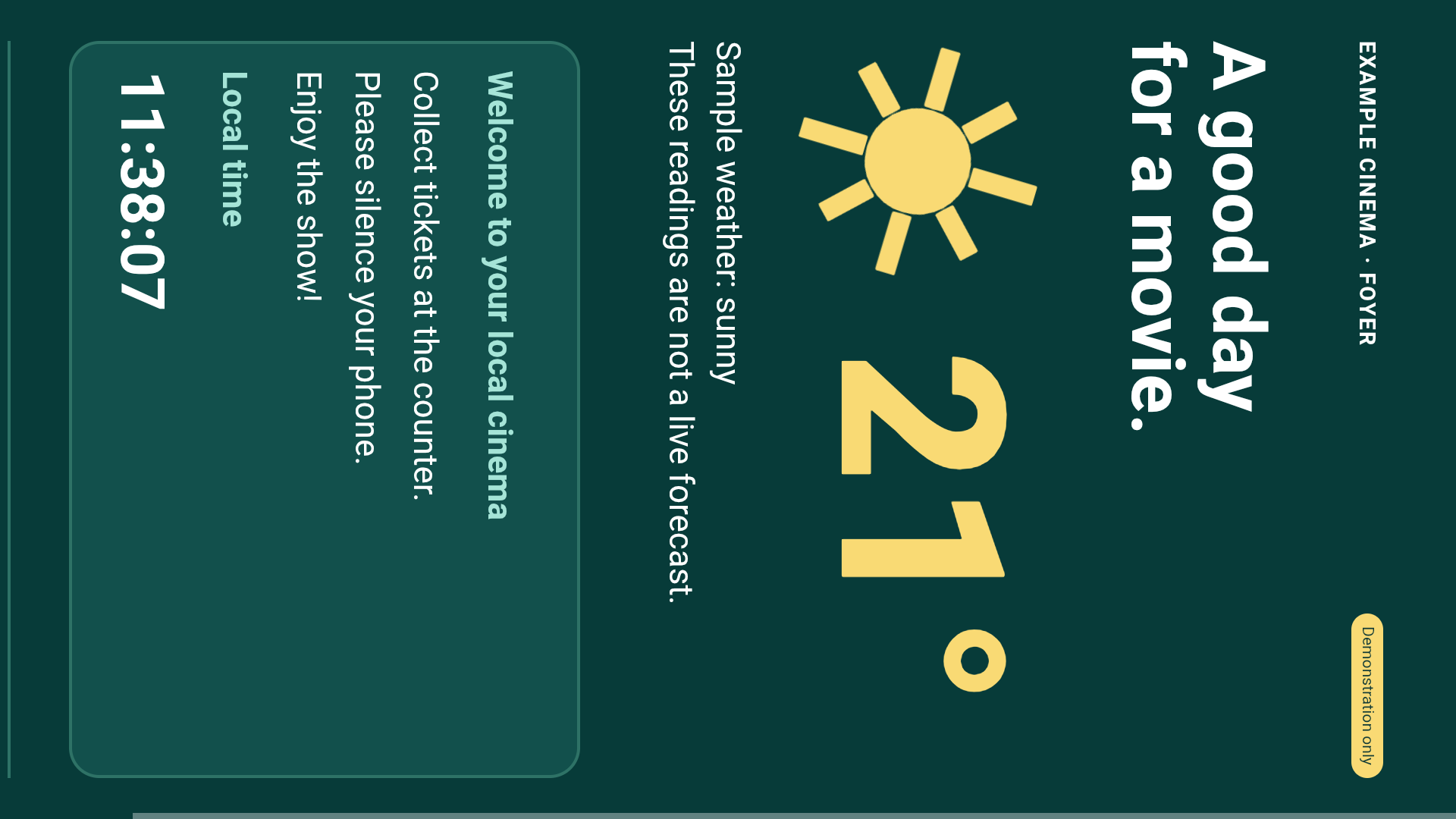
Which way will the page face?
It follows Poster Display Type: unrotated, −90 or +90. For a portrait television, the browser uses a portrait-shaped page area before turning it sideways. Detailed poster layouts show the web advert across the whole poster display, rather than adding film session details to the web page.
Preloading and animation
The next scheduled URL poster starts loading before its slot using that page’s saved Preload time (seconds). Change it beside the URL on Advertising Assets and save; 0 disables background loading. Playback reports its state as Loading, Ready or Unavailable. Only one future page is kept ready.
The hidden page keeps rendering so embedded content can prepare during the preload window. The same browser becomes visible when its advert starts, with animations such as clocks, CSS effects and canvas graphics continuing. It does not deliberately reload the page at the start of the slot.
One URL still reloads to pick up changes
The next appearance uses a fresh hidden browser, including when the programme contains only one URL. The main document is revalidated with the server; ordinary static resources can remain cached. Once ready, that same prepared browser becomes visible without an additional load. A website should not depend on preserving a permanent tab across appearances.
This works in Random and Clock-synchronized playback. Random reserves its next choice early. If the replacement is slow or fails, the current item remains visible; later attempts can recover. A synchronized player only reveals a late page while it still belongs to the current slot. A first page after startup can show Loading because there is no previous item to retain.
For a three-second preload, set 3 beside the URL and save. Choose a display duration longer than 3 seconds to allow the head start. A complex site may need more time; preload is not a fixed readiness guarantee. Watch Playback’s URL state and several real refreshes. Changes to embedded data remain subject to that website’s own loading/cache behaviour.
A blank preview does not always mean a blank TV
The browser control panel previews pages inside a frame. Some websites block being placed inside other sites. The Android player opens the URL directly in its own WebView. Test on the physical screen before deciding that a blocked preview makes the page unusable.
HTTPS URL adverts need a valid certificate. Do not put passwords in the URL. Sites that require sign-in, unsupported browser features, large downloads or scrolling are poor choices for unattended adverts.
Make a readable live page
- Use large text and high contrast.
- Keep the main information visible without scrolling.
- Allow enough Poster Delay for customers to read it.
- Use a reliable source and a clear fallback when its data is unavailable.
- Test on the lowest-powered player you intend to use.
- Remember that every follower needs to reach the website independently.
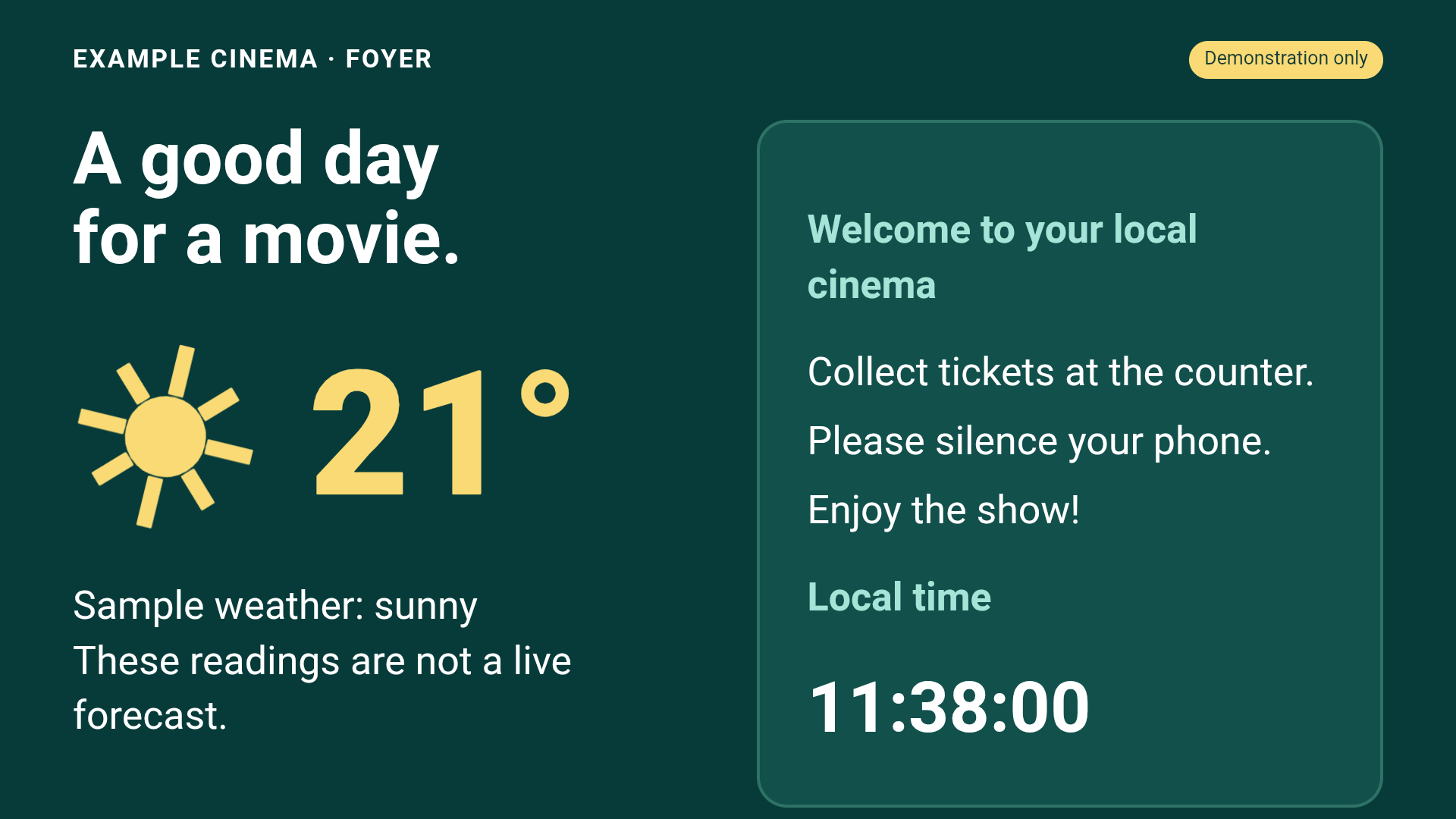
The included notice-board template illustrates the layout. Its clock is live, but its weather readings are samples. Your website team must connect real data before calling it a weather service.