

Operator handbook
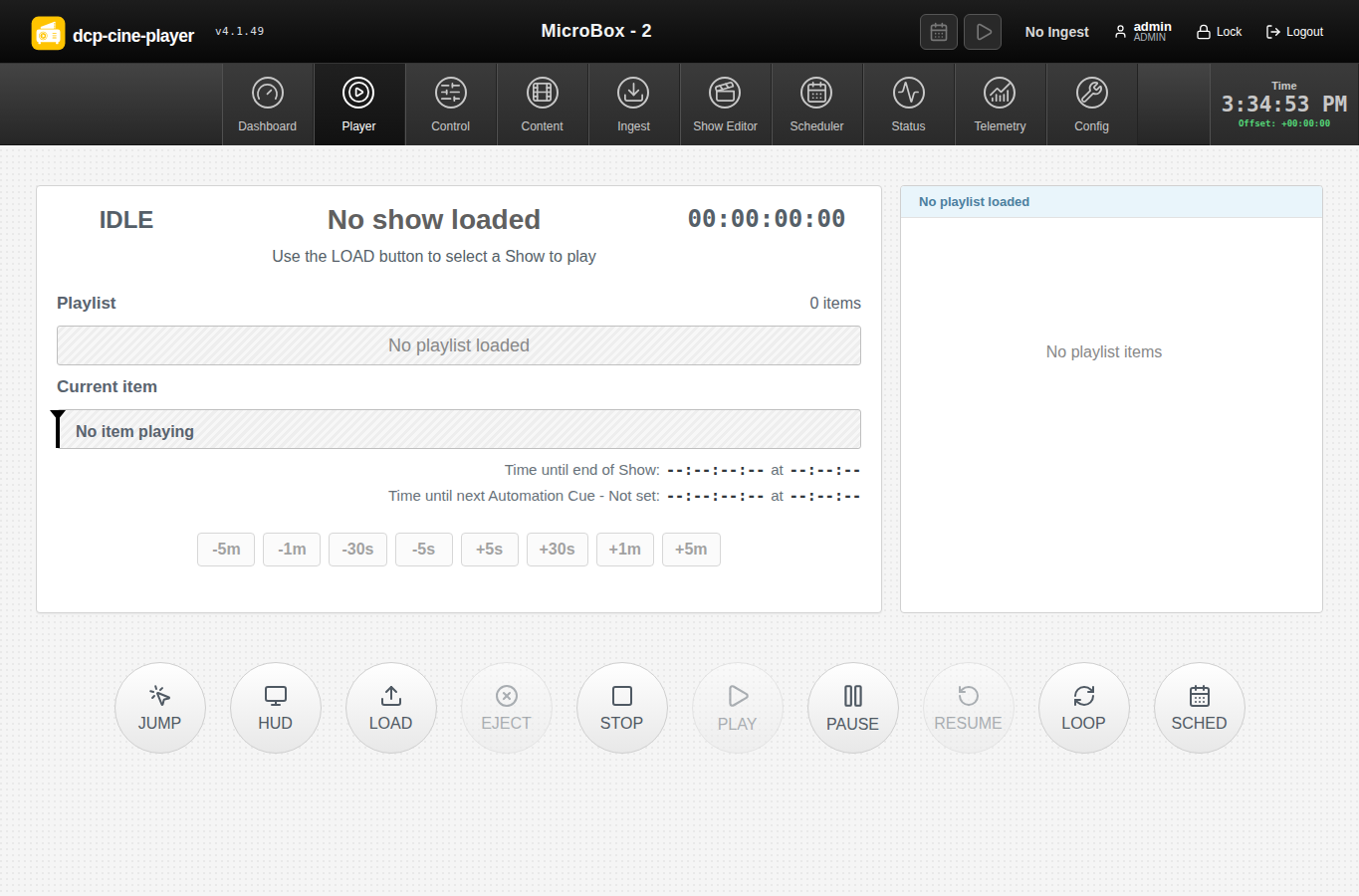
A safe daily sequence is: check the player, ingest early, resolve KDM/readiness issues, build and rehearse, schedule, then monitor.
Start-of-day check
- Dashboard shows the expected screen/site, licence and available storage.
- Player is stopped and no stale playlist is unexpectedly active.
- Trusted clock agrees with the venue clock and timezone.
- Today’s schedule is correct and scheduler mode is intentional.
- Display/audio/automation systems report ready.
Ingest content
- Open Content → Ingest.
- Select or add a filesystem, removable or FTP source.
- Set its asset type to DCP, IMF, EAR, media or KDM; do not mix package classes in one source definition.
- Scan the source, review discovered packages and choose the required composition.
- Start ingest and wait for completion. Do not remove media during copying.
- Open the imported clip/package and check its graphical type marker, readiness, duration, resolution, audio and encryption state.
The built-in read-only FTP library exposes completed content under /DCP, /IMF, /EAR and /media.
Import and check KDMs
Import the KDM from Content. Confirm it targets this player certificate, its composition/key IDs match, and the validity window covers the entire intended show. Fix clock or recipient problems at source; do not work around them by weakening validation. Encrypted IMF is detected but not playable until compatible IMF key delivery is implemented and qualified.
Build a show
Open Show Editor, create/load a show and add content in order. Graphical markers distinguish DCP, IMF, EAR and ordinary media without relying on text in the type box. Add black/delay and automation cues or macros deliberately. Save under a clear operational name, reload it, and rehearse where the venue permits.
Schedule and monitor
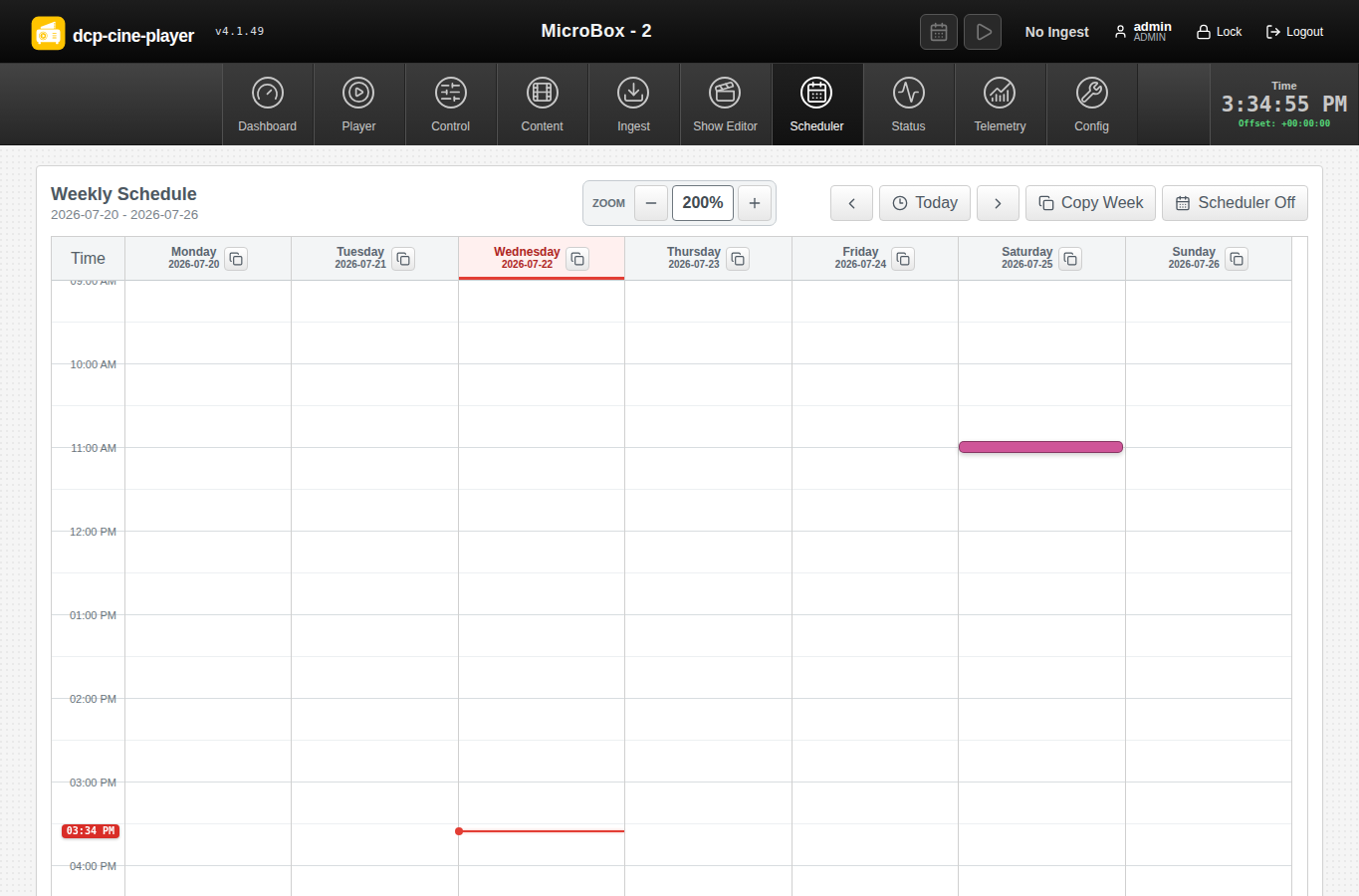
Drag or add the saved show to the weekly calendar. Verify day, local time and overlap. Enable the scheduler only after the plan is complete. During playback, monitor active item, timeline, output, optional vectorscope and automation feedback; do not edit the active show without an operational reason.
Automation and triggers
Configuration defines devices, cues and macros. Test individual harmless cues first, then macros, then playlist timing. External triggers must use unique, documented mappings and a controlled network. Stop testing immediately if a cue affects an unexpected auditorium device.
Audio and calibration
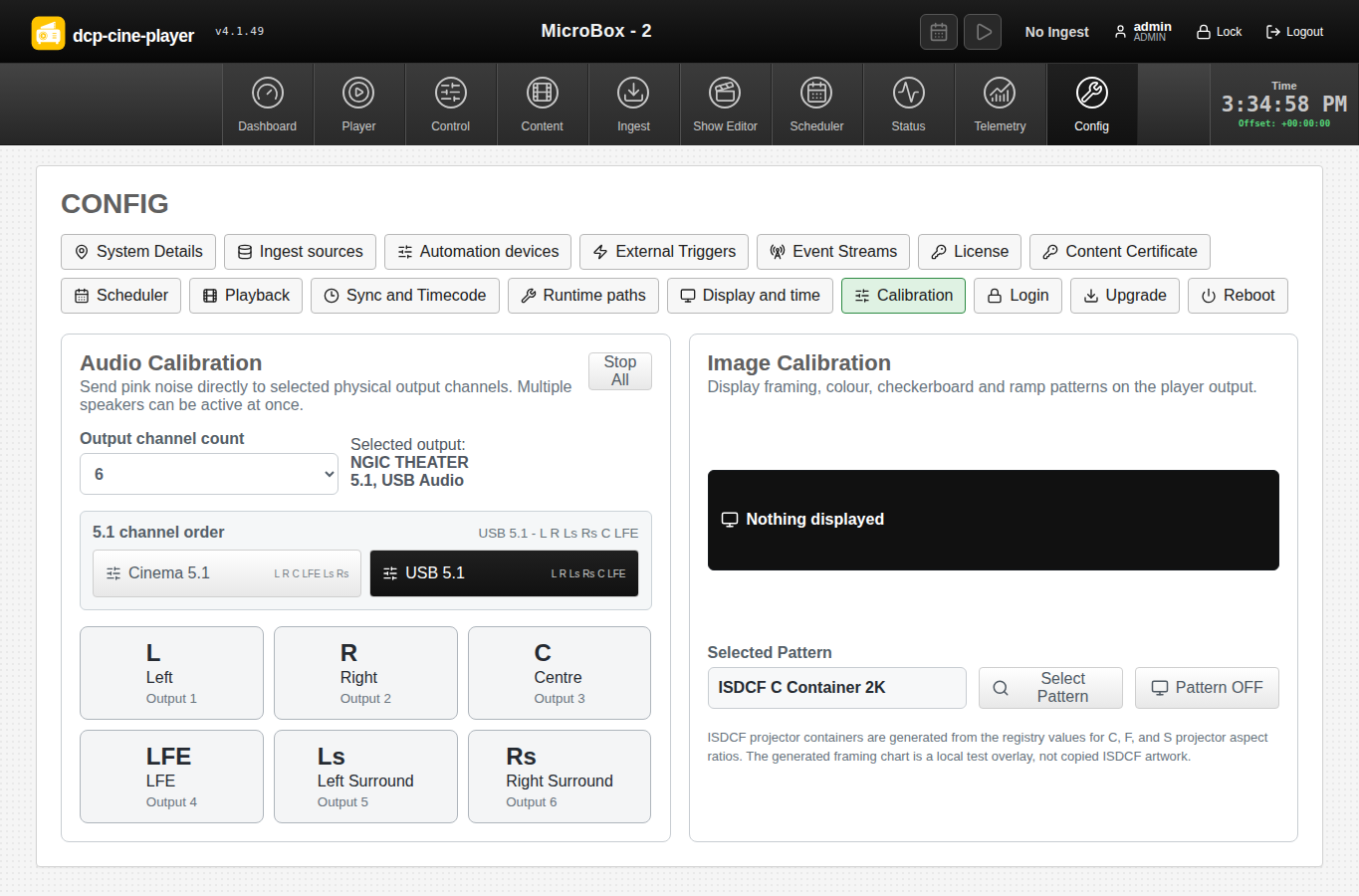
Select the output device and a profile matching the processor/channel order. Test one speaker at a time at a safe level. Save custom matrix profiles with venue-specific names. Verify picture patterns on the final display chain and confirm D‑Cine Display Lock/output protection where protected content requires it.
Documentation edition: 6 September 2026. Check procedures against the installed release and venue policy.